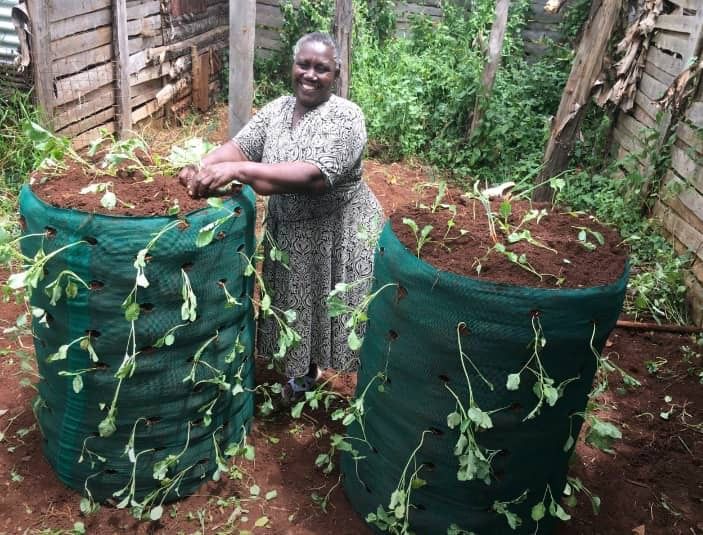
Laudara Sack Gardens: UN Year of Women Farmers

Irene Zijp • March 22, 2026

Empowering Women Farmers 2026

The United Nations has declared 2026 the International Year of the Woman Farmer, spotlighting women’s vital yet often overlooked roles in global agrifood systems. Laudara’s sack gardens project in Uganda exemplifies this focus by equipping women farmers with innovative, space-efficient tools to boost food security and economic independence.


Project Overview

Laudara’s sack gardens initiative targets rural women in Uganda, using vertical sack-based farming to grow vegetables in limited spaces. These portable gardens help women produce high-yield crops like kale, spinach, and tomatoes despite land scarcity and climate challenges. By providing training and materials, the project addresses key barriers such as limited access to land and resources, aligning with UN goals to close gender gaps in agriculture.


Alignment with Global Goals

The project supports the International Year of the Woman Farmer’s aims: raising awareness, promoting policies for equal access, and fostering investments in women-led agriculture. In Uganda, where women comprise nearly half the agricultural workforce but own minimal land, Laudara’s efforts contribute to poverty reduction and sustainable development.

Laudara invites partners and donors to amplify these stories during 2026, turning recognition into lasting change for women farmers worldwide.


Focus on Women Farmers

In Ndegeya, women farmers face acute challenges including limited access to arable land, unpredictable weather patterns exacerbated by climate change, and heavy reliance on subsistence crops amid rising food prices. Many households struggle with malnutrition and poverty, as women—who form the backbone of local agriculture—often lack seeds, tools, and training despite performing most farm labor. Laudara’s sack gardens project directly counters these realities by enabling women in Ndegeya to cultivate nutrient-rich vegetables in small spaces, fostering resilience, better nutrition, and supplemental income even in tough 


Women participants report increased household nutrition and income from selling surplus produce at local markets. For instance, sack gardens enable year-round harvesting, reducing reliance on seasonal rains and improving resilience to droughts common in Uganda. This hands-on empowerment mirrors global evidence where resource access doubles yields for women farmers

.
Share this post:

By Irene Zijp March 1, 2026
Empowering Youth Through Health Education
By Irene Zijp February 8, 2026
NCC’s Efforts to Support Ndegeya’s Communities
By Irene Zijp February 5, 2026
Growing Hope from Doorsteps
By Irene Zijp January 27, 2026
How the Idea of a Community Mill Began
By Kelly Brantner January 24, 2026
Laudara's 2026 Community Milling Initiative
Hands preparing a syringe for injection; white background with blurred text.
By Irene Zijp December 29, 2025
Ndegeya Now Vaccinates On-Site 
A group of people sitting outdoors on a bench. They are gathered in a green space.
By Irene Zijp November 11, 2025
Working with and through the local experts
By Irene Zijp October 28, 2025
Laudara Foundation supports new mothers with baby packs
By Irene Zijp September 26, 2025
How Ndegeya’s Elders Are Surviving Against All Odds
By Irene Zijp July 18, 2025
One Year One of special care for pregnant women