
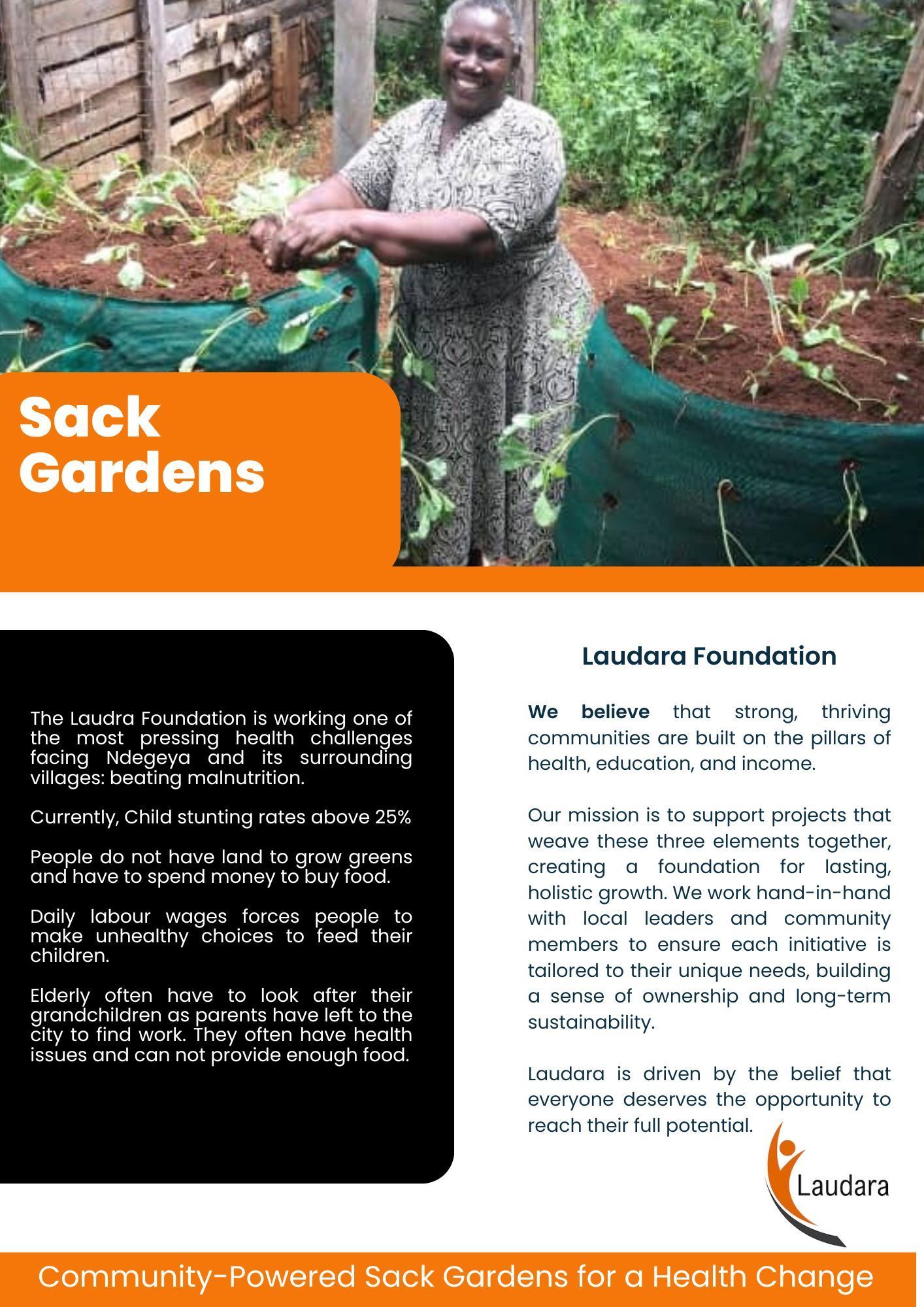
Sack Gardens

The Challenge: Sufficient Healthy Food

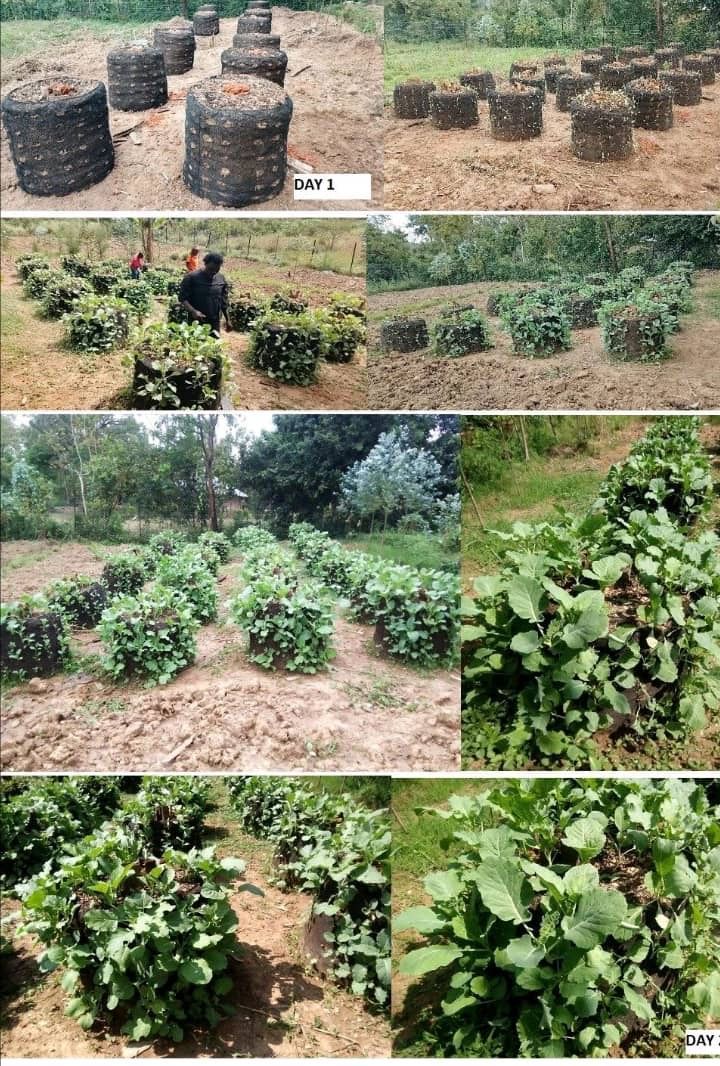
Ndegeya families grapple with chronic challenges: tiny plots or no land due to population pressure, soaring vegetable prices and child stunting rates above 25% from nutrient-poor Posho (maize) and beans diets lacking vitamins and iron. Frequent dry spells strain borehole water, pests ravage crops, and irregular incomes leave little for market food—trapping families in hunger cycles despite its fertile surrounds. This project directly counters these by enabling sack gardens on doorsteps (no land needed), slashing food costs by 70%, delivering iron/vitamin-rich nakati and kale to fight stunting, and creating barter networks for variety—all watered efficiently via gravel columns. Natural companions like marigolds repel pests organically, while UGX 5,000+/week sales give breathing room for fees/medicine, turning vulnerabilities into self-sustaining skills.

Hands holding yellow grain, Community Milling Association flyer.

Why Sack Gardening?

In the Ndegeya area—spanning 9 villages—many poor families face land scarcity, high food prices, and malnutrition despite fertile soils nearby. Sack gardening offers a simple solution: using recycled sacks filled with soil, anyone can grow nutrient-rich vegetables like kale and nakati right at their doorstep, even in the tiniest yards. The Laudara Foundation launches this pilot to spark self-reliance, proving families can feed themselves better, barter with neighbors for a bigger variety of food, and earn small incomes from surplus sales—all with minimal cost.


Benefits for Village Self-Sustainability

This approach transforms villages by building skills, cutting expenses, and fostering community ties and reducing hunger without cash. Surplus sales at Masaka markets create income, funding school fees or seeds. Over time, villages expand gardens independently, form peer groups for sharing tips/tools and rely less on aid.

Download the brochure

Project Goals

The goal is to equip families with the tools to grow nutrient-dense greens like nakati, kale and tomatoes right at home. This directly improves family health by providing 50% or more of their daily vegetable needs—packed with iron, vitamins A and C, calcium, and fiber to combat malnutrition, boost immunity, and reduce chronic malutrician in children, while cutting dependence on expensive, often low-quality market produce. 

Families will also learn to barter excess greens with neighbours growing different crops, such as swapping for beans, eggs, or bananas, which fosters community cooperation and increases the variety of healthy vegetables everyone enjoys without needing cash. 

If families still have surplus produce after home use and bartering, they can sell small amounts at local Masaka markets or to schools and hotels, generating UGX 5,000 or more per week in extra income to cover essentials like school fees. All training will emphasize reinvesting any earnings into seeds, soil, or new sacks, ensuring families sustain and expand their gardens independently for long-term self-reliance.

Benefits for the community


Beyond individual families, sack gardens create thriving village ecosystems in Ndegeya. Barter markets emerge naturally as neighbors swap greens for eggs, beans, or bananas—eliminating cash barriers while diversifying everyone's diet. Peer learning networks form through church demonstrations and WhatsApp groups, with champion families training others, accelerating adoption across the 9 villages. Women's groups gain economic power by collectively selling surplus to Masaka hotels (UGX 50,000+/month per group), funding communal projects like school gardens. Clinic nutrition education amplifies impact as mothers see/taste fresh greens during visits, linking sack gardens directly to child health outcomes. This creates a virtuous cycle: healthier kids attend school better, families save money, villages reduce aid dependency, and community pride soars as Ndegeya becomes known as "the green village"—proving Laudara's model of sustainable, contagious change.


Let’s Build a Stronger Ndegeya Together


We  are seeking to raise $5,000 to cover the costs of the setting up of the project, running the demonstration project and produce and distribute the first 50 produce growing bags including training and support . Every contribution—big or small—brings us closer to our goal.Join us in making this transformative community project a reality. With your help, we can empower local families become healthier and self supportive. Join us to build a brighter, more independent future for Ndegeya.

Meet the team of the Sack Gardens

Can you help us with the development of the Mother and Child Centre?